The United States has proposed tariffs of up to 25 per cent on Indian goods, putting pressure on New Delhi to conclude a bilateral trade agreement with Washington.
The United States has proposed tariffs of up to 25 per cent on Indian goods, putting pressure on New Delhi to conclude a bilateral trade agreement with Washington.
The proposed duties could be reduced to 17 per cent if India reaches an Agreement on Reciprocal Trade with the US and addresses concerns raised in Washington’s investigation into excess manufacturing capacity.
The announcement by the Office of the United States Trade Representative (USTR) has added uncertainty to India’s trade outlook, with exporters and investors awaiting clarity on the proposed tariff structure and the ongoing negotiations between the two countries.
Under the proposal, Indian goods could face tariffs of up to 25 per cent, net of existing Section 301 duties, with exemptions for certain products.
However, the US has indicated that a lower tariff rate of 17 per cent could be considered if India enters into a trade agreement addressing the findings of its investigation.
The development comes at a time when India and the US are negotiating a Bilateral Trade Agreement (BTA), with both sides having earlier announced a broad framework for the proposed pact.
Here are five things to know about the proposed US tariffs, the investigation and their implications for India.
What has the US proposed on Indian goods?
The USTR has proposed tariffs of up to 25 per cent on Indian goods as part of its investigation into structural excess capacity and production in manufacturing sectors.
The proposed tariff rate could be lowered to 17 per cent if India reaches an Agreement on Reciprocal Trade with Washington that addresses the findings of the investigation.
The USTR said the proposed action would include applying tariffs of up to 25 per cent on all goods from India, after accounting for existing Section 301 tariffs, while providing exemptions for certain products.
The US has also proposed considering adjustments to additional duties to account for tariffs imposed under existing Section 301 and Section 232 actions.
This means the proposed 17 per cent rate is linked to India reaching a trade agreement with the US, while the higher rate could apply if an agreement is not reached.
The proposed measures are part of a broader US exercise covering 14 economies.
How do India’s proposed tariffs compare with other countries?
The proposed tariff rates vary across India’s competing economies in the region.
The US has proposed tariffs of up to 35 per cent on Vietnam, 20 per cent on China and Singapore, and 18 per cent on Bangladesh, Cambodia, Indonesia, Malaysia and Thailand.
For the European Union, Japan, South Korea, Switzerland and Taiwan, the proposed tariffs are up to 15 per cent, net of Most Favoured Nation (MFN) rates and existing Section 301 duties.
The US has also indicated the possibility of lower rates for some countries if they enter into agreements addressing the investigation’s findings.
For Vietnam, the proposed rate could be reduced to 20 per cent, while Singapore could get a lower rate of 10 per cent, subject to trade agreements or commitments.
For India, the proposed 17 per cent rate would be lower than the rates proposed for several competing economies, including Bangladesh, Vietnam, Malaysia and Thailand.
The difference in proposed tariff rates could have implications for the relative competitiveness of exporters from these countries in the US market.
However, the final impact will depend on the products covered, exemptions and the outcome of negotiations.
Why has the US initiated the investigation against India?
The investigation was initiated on March 11, 2026, under Section 301 of the Trade Act of 1974. It covers 16 economies, including India, China, Japan and the European Union.
US Trade Representative Jamieson Greer determined that the acts, policies and practices of 14 economies relating to structural excess capacity and production in manufacturing sectors are unreasonable and burden or restrict US commerce.
In India’s case, the USTR flagged several concerns, including industrial plans to expand manufacturing, inadequate labour protections, financial repression policies, sustained market access barriers and an alleged failure to address global excess capacity.
The US also raised concerns about India’s manufacturing capacity and production in sectors such as pharmaceuticals, medical devices, steel, solar and information and communications technology (ICT).
According to the USTR, these practices reduce commercial opportunities for US producers and exporters in India and other markets. It also alleged that they contribute to losses in US manufacturing production, exports, jobs and investments. However, India has disputed the assessment.
In its response, the Department of Commerce stated that India does not have structural excess capacity in any sector.
The government has said it engaged constructively throughout the investigation and is examining the latest notice issued by the USTR.
What is India’s response and where do trade negotiations stand?
The Indian government has said that the latest notice issued by the USTR is under examination. In a statement issued on November 25, the government said India and the US were already engaged in negotiations for a Bilateral Trade Agreement.
It reiterated that trade-related concerns should be addressed within the framework of these negotiations.
India also said it remained committed to working closely with the US towards an early conclusion of the agreement, referring to the announcement made by the two countries on February 2, 2026, and the subsequent Joint Statement issued on February 7.
Earlier, on November 15, Commerce and Industry Minister Piyush Goyal had said that Washington had assured New Delhi of preferential trade access with lower duties than competing countries.
“India will get preferential trade access in the US with lower duty than our competitor countries,” Goyal had said while addressing the media in Cairo, Egypt.
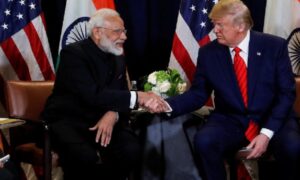
He had also said that the commitment was part of a broad framework agreement reached between Prime Minister Narendra Modi and US President Donald Trump.
The latest USTR proposal, however, has brought the tariff issue back into focus, with the outcome depending on the progress of bilateral negotiations.
Why is GTRI opposing the proposed trade arrangement?
The Global Trade Research Initiative (GTRI) has urged India to reject the proposed trade arrangement under the US Section 301 investigation, arguing that Washington is using the threat of higher tariffs to secure trade concessions.
In its report, the think tank said the proposed tariff structure effectively recreates the earlier reciprocal tariff framework under a different name. According to GTRI, the arrangement offers lower tariff rates to countries that enter into trade agreements while exposing those that do not sign agreements to higher duties.
It described India’s proposed 17 per cent rate, compared with 25 per cent without a trade pact, as an attempt to offer a marginal tariff advantage over competing economies.
The report also identified seven Indian sectors facing allegations of potential excess capacity or export surpluses. These include solar modules, petrochemicals, steel, textiles, health-related goods, construction materials and automotive products.
GTRI pointed out that India’s solar module manufacturing capacity is nearly three times its domestic demand. However, it argued that manufacturing capacity should also be assessed against domestic consumption, export markets and future demand.
The think tank further questioned the rationale behind offering tariff relief without requiring changes in industrial capacity.
It recommended that India address the US allegations sector by sector and demonstrate that its manufacturing investments cater to domestic consumers, overseas customers and future demand.
GTRI said India should defend its industrial expansion on economic grounds rather than allow export growth alone to be treated as evidence of excess capacity.
The USTR has invited public comments on the proposed measures. Written submissions and requests to appear at the hearings must be submitted by January 5, 2027, while hearings are scheduled to begin on January 25, 2027.
Source : Zeebiz